


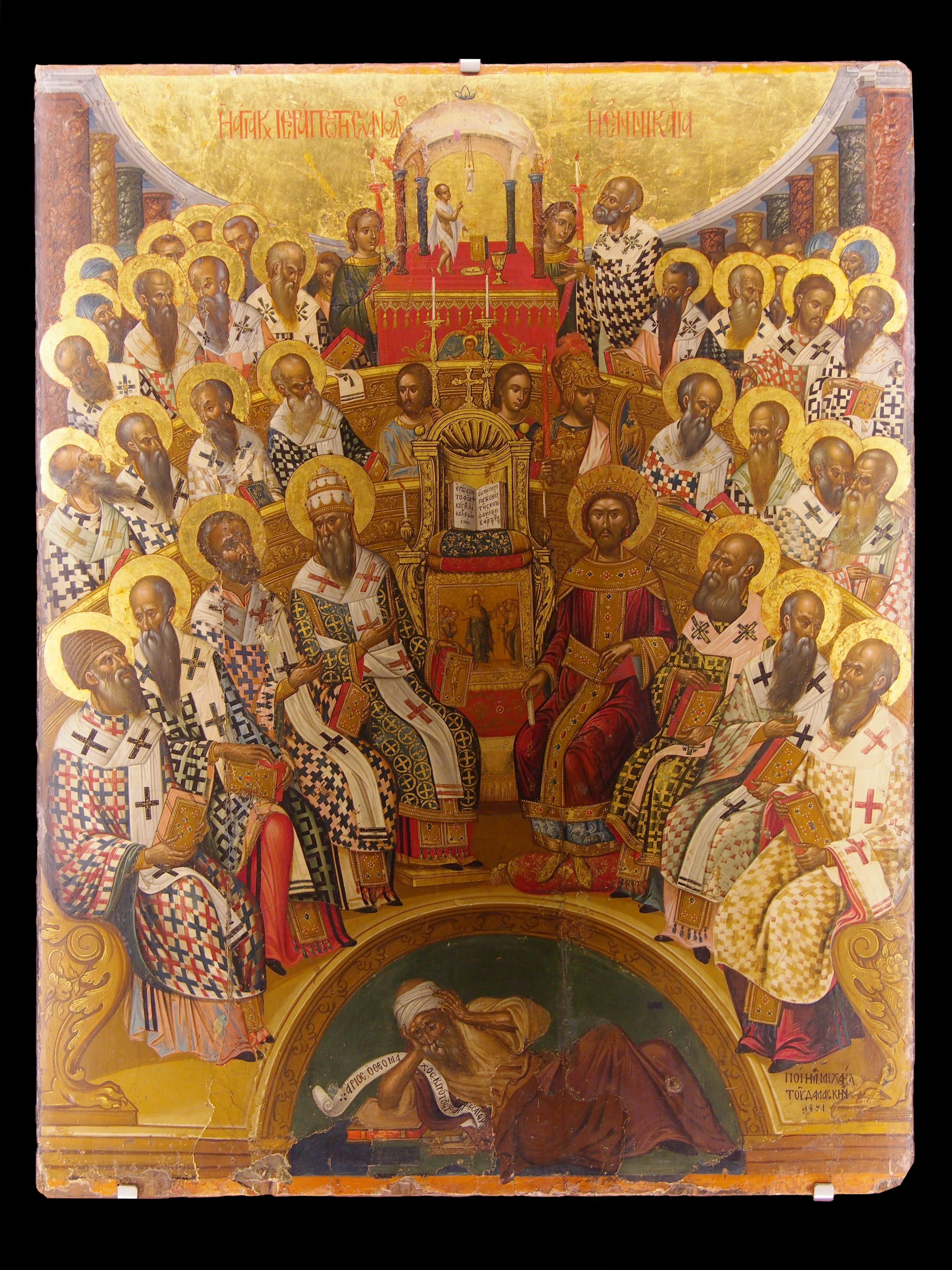
As I’ve been reflecting on part 1 of my Nicene Creed series, and am about to record part 2 which will go up sometime this week, I realized I made a mistake when comparing the theological errors of Arianism to Orthodoxy. I said that Arianism makes God more unapproachable, because it postulates the necessity of a less-divine mediator “God” who can stand between us and the Father. And Orthodoxy makes God more approachable by recognizing that the fullness of His Godhead comes to directly touch human nature.
But in a way, the opposite is true. In a sense, it is easier to approach God through a mediator (as Arianism says) than it is directly. And coming into direct contact with God is a terrible and overwhelming prospect. Look at some of these quotes from Eastern fathers talking about the fearful and awesome weight of God’s infinite love:
‘You see, Lord, that I cannot bear more and would die,’ for man is compassed about and cannot carry the fullness of grace. - St. Silouan
That unapproachable light, that unbearable glory…My mind is completely astounded. I tremble with fear. - St. Symeon
Love for Christ is something else. It is without end, without satiety. - St. Porphyrios
I think also of the story of St. Mary of Egypt, who could not bear to enter a church to celebrate the Exaltation of the Cross, held back by some invisible force inside her. She realized it was the weight of her sins compared to the infinite purity and grace of Christ which prevented her from entering. Only by praying for grace and humility could she eventually bring herself to cross the threshold of the church.
Because I think there’s something in our broken, sinful nature that makes the perfect love of God completely foreign and unbearable. We naturally want there to be a mediator, so we don’t need to look at God directly in the face, but can keep ourselves and our sins hidden from him. I look at the example of the Prodigal Son. When he finally returned to his father, his plan was to go back not as a son, but as a servant. “I am no longer worthy to be called your son; treat me like one of your hired hands” he said. Because there is something safe about a transactional relationship. It’s easier to say to yourself, look, I’m putting in the work to make up for what I did, I’m contributing to cover my sins and fulfilling my rightful role. Because by keeping some distance between us and God, we can avoid full vulnerability and maintain some guise of safety and control, which is what we as humans naturally understand and desire. But God isn’t here to make a contractual relationship with us. The Father runs right up to the Prodigal Son, embraces and kisses him, and restores him to full direct relationship as beloved son. And that is profoundly uncomfortable for us to understand. And our egoistic and self-centered nature pulls away from that. The Prodigal Son himself cannot understand: “Father, I have sinned against heaven and before you; I am no longer worthy to be called your son”. Because there is something to that pure, infinite love that reveals all the darkness of who we are, and without grace we naturally resist and deny that love.
There are some Eastern fathers who theorize that Heaven and Hell are actually the same place, and just different manifestations of how different souls experience the infinite love of God. The humble and contrite soul can freely receive God’s love with eagerness and joy, and experiences Heaven; but to the self-centered egotistic soul, the all-present, inescapable love of God is pure agony and Hell. And I think there might be something to this idea. After all Psalm 138:8 (LXX) says: “If I should ascend into heaven, You would be there; If I should descend into Hades, You would be there”. This idea also makes sense of the descriptions of God as an all-consuming fire, while simultaneously describing Hell as a place of fire. So no matter the state our soul, each person’s fate is to stare straight in the face of an infinite and all-loving God on Judgement Day. There’s nowhere we can go to escape His love.
So I think this is something we should recognize. The Orthodox idea that God directly comes into contact with humanity makes him less approachable, not more. Not because he is lacking in grace; but because we are overflowing with sin and pride. Because how can a self-centered and prideful ego possibly come into direct contact with the infinite love of God?
The key is, in the words of St. Silouan, to “keep thy mind in hell and despair not.”